
UK Rental Market Rebalances in 2026: What Rightmove’s Latest Data Means For Landlords And Tenants

The UK rental market is entering a new phase of stability after several years of rapid growth and intense competition.
The latest insights from Rightmove’s Rental Price Tracker highlight a clear shift: rents are no longer rising at the pace seen during the pandemic-era surge, and in some areas, they have begun to level off.
For landlords, tenants, and investors alike, this marks an important turning point, one that demands a more strategic, data-driven approach.
A Market at a Turning Point
Recent data shows that average advertised rents outside London have stabilised at around £1,370 per month, marking the first time since 2017 that early-year rents have not increased.
This pause follows a sustained period of growth. In 2025, rents rose by 2.2% annually, a significant slowdown compared to the sharp increases seen in previous years.
The direction of travel is clear:
Rental growth is cooling
Price adjustments are becoming more common
The market is shifting towards balance
Supply Is Improving - But Still Constrained
One of the key drivers behind this change is an improvement in supply. The number of available rental homes is now around 9% higher than a year ago, giving tenants more choice and reducing the intense competition seen previously.
However, this needs to be viewed in context. Despite recent gains, rental supply remains approximately one-third lower than a decade ago, underlining a persistent structural shortage.
In practical terms, this means:
Conditions are easing, but not oversupplied
Well-priced properties still let quickly
Long-term upward pressure on rents remains
Tenant Demand Softens
At the same time, tenant demand has begun to ease. The average number of enquiries per property has dropped significantly compared to 2024 levels, indicating less frenzied competition.
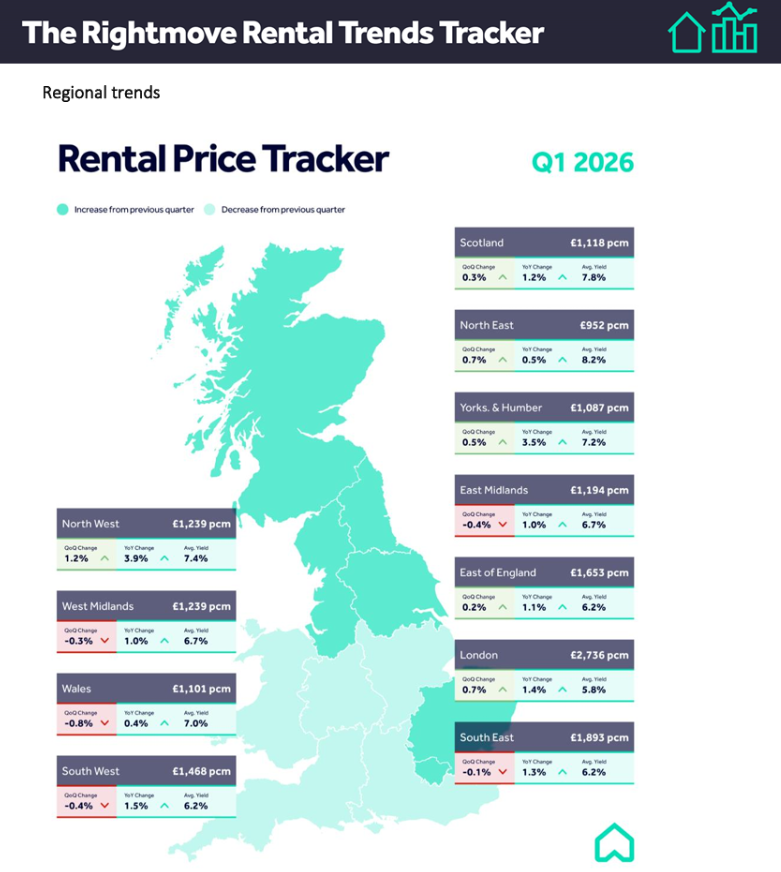
Affordability is a major factor. Many tenants are reaching the limit of what they can realistically pay, forcing landlords to price more competitively.
This shift is also reflected in pricing behaviour:
Around 26% of listings are seeing price reductions—the highest level recorded since 2012
Overpricing is increasingly leading to longer void periods
Accurate initial pricing is becoming critical
Scotland Snapshot: Steady Growth and Strong Yields
While much of the UK is seeing a cooling in rental growth, Scotland presents a slightly different picture, with steady - if modest - performance and attractive returns for investors.
Rental market headlines for Scotland:
Average monthly rent: £1,118
Year-on-year rent increase: 1.2%
Average yield: 7.8%
These figures reinforce Scotland’s position as a market offering relatively strong yields, even as rental growth moderates. For landlords, this combination of income stability and return potential remains compelling.
London vs the Rest of the UK
The rental story in London differs slightly from the wider UK.
While rents in the capital have shown modest quarterly growth (around 0.7%), they remain below peak 2025 levels.
Elsewhere, rents have largely plateaued or even declined in recent quarters, reflecting a broader rebalancing of supply and demand.
This regional divergence highlights the importance of hyper-local market knowledge when setting rental strategies.
What to Expect for the Rest of 2026
Rightmove forecasts that rents will rise by around 2% in 2026, signalling a return to more sustainable, modest growth.
This aligns with a market that is:
Moving away from extreme competition
Becoming more price-sensitive
Gradually stabilising after years of volatility
However, underlying supply shortages mean that downward pressure on rents is likely to be limited over the long term.
Strategic Implications for Landlords
In this evolving market, success will depend less on riding price inflation and more on execution.
Key priorities include:
1. Pricing Precision
Getting the initial asking rent right is now critical. Overpricing can lead to reductions and longer voids.
2. Tenant Retention
With demand softening, retaining reliable tenants is often more cost-effective than re-letting.
3. Property Presentation
Increased choice means tenants are more selective. High-quality listings and well-maintained homes stand out.
4. Market Awareness
Regional and local dynamics vary significantly—blanket strategies are no longer effective.
A More Balanced Market Ahead
The UK rental market is no longer defined by relentless growth and extreme competition. Instead, it is entering a more sustainable phase—one where supply, demand, and affordability are beginning to realign.
For tenants, this offers greater choice and negotiating power.
For landlords, it presents an opportunity to adopt a more strategic, long-term approach.
At Bowman Rebecchi, we continue to monitor these shifts closely, helping our clients navigate a changing market with clarity and confidence.
For more insights on the rental market or tailored advice on your property portfolio, get in touch with our team today